On my first visit, Bobby handed me a draft of the Vengeance Of Cleopatra Wong script by him and Mike Cassey dated July 2006. Cleopatra Wong loses her husband, Captain Navarro (Romano Kristoff) in a raid on the fortified lair of drug dealer Carlo “The Doc” Cortez. She trains with her mentor, Singaporean martial arts guru Peter Tan (Peter Chong) to seek revenge on Cortez, battling not only his trusted killers Somchai (Monsour Del Rosario) and the mute Jinx (Cynthia Luster), but her husband's effeminate partner Rene (Franco Guerrero). The script also introduces Cleo's teenaged daughter Samantha (Bebe Pham) as her mother's conscience; Cleo soon dispatches her daughter back to Singapore before embarking on a killing spree from Manila's docks to the Doc's drug lab in the Ifugao mountains.
Bobby planned to fly to meet with his potential investors on the southern island of Cebu that Friday. He and Celso spend much of the afternoon hammering out a new ninety-page treatment for Vengeance Of Cleopatra Wong, which by now featured more of Cleo’s daughter than Cleo Wong herself.
During my two-week visit to Manila in February 2007, I visited Bobby's office almost every day. As the nerve centre of Vengeance..., the place had come alive. Cattle calls for stuntmen, ongoing discussions with cinematographers Arnold Alvaro and Jun Pereira – all funded out of Bobby's pocket, and all captured on my three-chip mini DV camera. The electricity filled the room as Bobby crackled with manic creative energy; I could close my eyes and imagine what the BAS Film office was like in its Seventies' and Eighties' heydays.
In June 2007, Bobby withdrew from Bigfoot's Vengeance... project.
Mike Cassey: “That was due to problems over the budget. Bobby really wanted to shoot the movie in and around Manila and use a local grip house for the equipment hire, all with a view to minimizing the production costs. But Gleissner wanted Bobby to shoot everything at Bigfoot in Cebu, using their equipment and facilities. But that ballooned the budget because of extra air fares and hotel accommodation for our production crew and local actors. Although the new script belonged to Bigfoot, Bobby wisely didn't sell them the rights to the Cleopatra Wong character which belonged to him. And so the project was cancelled.
“Michael Gleissner had a good reason for wanting the movie to be made at the Bigfoot studios, which I understand perfectly. He has a Film School there and wanted his students to have first-hand experience of film-making and we would also have used some of his students, as actors, extras and interns. But it wasn't to be. You can imagine Bobby's deep disappointment at not being able to push through with his long-awaited movie comeback.”
At the end of July 2007, Bobby closed the BAS Film office in Plaza Santa Cruz and relocated to a downstairs room in his Bulacan home. Almost thirty years of Bobby's history was transplanted to a new set of laminated wood-lined walls. The door's imposing BAS Film plaque now greets visitors along the side of the house. The irrepressible Bobby continued the hunt for new investors, pitching one recycled project after the other.
...........
Email 01/03/08
Dear Brod Andrew:
You can inform your blog friends that I am making a come back and I might start either with "The LADY EXECUTIONER" with our mutual friend, Ms. MARRIE LEE, the one and only Cleopatra Wong to play the lead role, opposite, another friend, GARY DANIELS and will introduce in the movie the Australian kick boxing champion by the name of RICHARD MAGAREY.
The other movie project that I am now working on is, do not laugh yet, entitled - "They Call Her.... FATSO" the vehicle that I will use to introduce a heavy, but beautiful and talented unknown 350 lbs. female police detective who will make you, me and everybody who loves comedy action adventure, come out of the movie houses, satisfied and still laughing.
........
By August 2008, Vengeance… had mutated into The Lady Executioner, with proposed funding from France’s Canal Plus and the Singapore Film Commission. A second comeback feature for Cleopatra Wong, Fists Of The Sleeping Dragon, was to reunite Johnson Yap as the Bionic Boy and Franco Guerrero as the One-Armed Executioner; there was also a remake of One-Armed Executioner called Iron Fists Of Justice with a proposed cast of Gary Daniels, Shermaine Santiago, Richard Magarey, Monsour del Rosario, Cynthia Luster and Singapore’s Peter Chong.
Bobby’s dream project The Child Who Made Jesus Descend From The Cross, a story inspired by Bobby’s autistic daughter Roma, had been handed to Mike Cassey to write and direct, with Maria Isabel Lopez in the lead role. Expectations for Bobby's comeback were running high.
Brendan Young filming me, Henry Strzalkowski (behind him), Nick Nicholson and his wife Annie in Henry's flat, Makati, November 2008
RETURN TO MANILA 18th OCTOBER to NOVEMBER 8th
It’s been two years since my last trip to the Philippines, but I’m finally coming back to my spiritual homeland! It’s almost three weeks of interviews, archive research, lectures and screenings, and pitching various projects to Philippines’ funding bodies.
So far the schedule is filling quickly:
- A talk to post-graduate students at Ateneo University, 2pm on Tuesday 19th October - A Halloween screening at Fully Loaded, 31st October – more details to come - “Philippines Grindhouse” lecture and screening at the UP (University of Philippines) Film Centre and APFI (Asia Pacific Film Institute), dates and times to be confirmed
To all my friends and colleagues in the Philippines, I look forward to seeing you soon!
“MACHETE MAIDENS” IS FINALLY UNLEASHED!
Long-time readers will no doubt remember that I have been working on a documentary, “The Search For Weng Weng”, on the midget James Bond of the Philippines. Well, a lot has happened since I first picked up the camera almost four years ago. My producer Veronica Fury of Fury Productions pitched the project to ABC TV last year, and the word came back: allow the project to evolve into a documentary on B-filmmaking in the Philippines, and you have a deal! Funding came through from ABC TV, ABC Commercial, MIFF Première Funds, Film Vic, Screen Queensland, and Screen Australia.
At this point I stepped down as writer/director and we offered the driver’s seat to Mark (Not Quite Hollywood) Hartley. He agreed to come on board, with myself as Associate Producer, Research Consultant and Original Concept credits, and set to work crafting an essay-style documentary on the overseas filmmakers engaged in the export trade during the Marcos years of the late Sixties to early Eighties. Now titled “Machete Maidens Unleashed!”, Mark assembled a breathtaking array of intervewees, including Roger Corman, John Landis, Joe Dante and Allan Arkush, Cleopatra Wong's Marrie Lee and Franco Guerrero, and many more (full list is here).
I was privileged to attend the world premiere screening at the Melbourne International Film Festival in July, and was bowled over by its almost unanimous praise. The reviews have been rolling in ever since and there's no stopping the buzz; Machete Maidens' international premiere was at the Toronto International Film Festival, followed by Fantastic Fest in Austin with Mr Corman himself present, Zurich was the European premiere, and there’s still Sitges, Hawaii, Philadelphia, and many more festival screenings to follow…
…including the Brisbane International Film Festival in November!
Yours truly, director Mark Hartley and producer Veronica Fury are proud to be invited by this year’s St George BIFF to introduce the film, and hold a Q&A after the feature.
PLEASE JOIN US on Thursday 11th November, 8:30pm at Tribal Cinema 2
…or at a second screening on Sunday 14th November, 2:00pm at Place Barracks 1
Jim Gaines and I outside Cleo Wong's "monastery" in Baguio, November 2008
“CLEOPATRA WONG/ONE-ARMED EXECUTIONER” DVD OUT NOW...AND WE DID SOME OF THE BONUS FEATURES!
US company MPI/Dark Sky has just released a Philippines Grindhouse double bill from our good friend, the late director Bobby A. Suarez: kung fu superspy epic They Call Her Cleopatra Wong(1978) and the amputee revenge flick One-Armed Executioner (1980).
MPI asked for access to the interviews I'd shot in Manila with the casts and crews, including the only ever on-camera interview with the late Bobby himself (see here, then follow the “Bobby A. Suarez” tag for more info and interviews). They ended up using ten minutes of the Bobby interview, plus my chat with One-Armed’s Nigel Hogge; Mark Hartley’s interviews with Marrie Lee, Franco Guerrero and Joseph Zucchero make up the rest of the package’s incredible bonus features. Needless to say we're incredibly proud to be associated with such a (ahem) classy production!
The DVD was officially released on October 7th 2010 and is available for purchase on Amazon (click here).
They Call Her Cleopatra Wong: Outrageous pan-Asian actioner starring Singaporean beauty Marrie Lee as the high-kicking disco diva, weapons expert and secret agent Cleopatra Wong. While on holiday in Manila, Cleo uncovers a major currency counterfeit operation, and immediately her kindly but sleazy Interpol chief orders her on the trail. Clad in orange hotpants and white boots, shooting through thin air on a turbo bike and taking on thirty balding wrestlers at once, its little wonder fanboy Asian fetishist Quentin Tarantino cites Cleo as a major inspiration for his Kill Bill series.
In a classy display of Filipino ingenuity, producer/director Bobby A. Suarez milks his international locations for all his micro-budget allows: from a chop-sockfest above Hong Kong harbour and a riotous free-for-all on Singapore’s Sentosa Island to the film’s explosive finale, a thirty-minute undercover raid on a monastery with Cleo and co in nuns habits (and mustaches) tearing up the Philippines countryside in possibly the only entry in the Nuns with Guns subgenre.
Cleopatra Wong is a landmark film in Filipino cinema for a number of reasons - the first international hit from an all-local production as well as start of the hugely successful Cleo Wong series. Canny exploitation genius Suarez gleefully mixes equal parts black chick superhero Cleopatra Jones, the gadget-laden internationalism of James Bond films, and the still-popular antics of Bruce Lee. Never has Filipino cinema been so gloriously derivative, so cheesily Seventies, or so much goofy, jaw-on-the-floor fun.
One-Armed Executioner: "They killed his wife...They cut off his arm...Now he is going to teach them to die!” In One-Armed Executioner's opening frames, a dwarf gets snuffed in a phone booth and dumped into Manila Bay. There's a definite change in tone, much darker than the breezy Bionic Boy & Cleo Wong films: it's a simple, brutal actioner, the Philippines only and much-belated entry in the 'amputee revenge' cycle started book-ended by The One-Armed Swordsman (1972?) and The Crippled Masters (1982).
Cleopatra Wong’s Franco Guerrero has cultivated a more suave, almost Wayne Newtonesque demeanour playing Interpol agent Ramon Ortega. He loses white blonde trophy wife Anne to a drug baron's henchmen and turns into an embittered One-Armed alcoholic beaten up by Two-Armed dockside bums. His former boss tracks him down and sends him to a One-Armed kung fu training camp, turning the digitally-challenged agent into a One-Armed killing machine (like you can't see the arm under his shirt!). His revenge spree nets scientist Dr Henderson (former Green Beret Colonel, then-current bar owner and ubiquitous character actor Mike Cohen), the henchmen (Pete Cooper and Jim Gaines), and eventually the scumbag Edwards (Nigel himself, chased by Ortega's helicopter through a swamp - in a boat with a swastika painted on the side!
Andrew Leavold with Bobby A. Suarez outside the BAS Film office door, January 2008
BOBBY A. SUAREZ Interview with Andrew Leavold Part 2
[filmed in Bobby's backyard in Bulacan, November 2006]
Andrew: You've just had a meeting with potential investors. How do you feel at the moment about the future of Cleopatra Wong?
Bobby: I don't know them, and they believe that Cleo is still a name to reckon with. And they agree with other people like you, that the name Cleopatra Wong is a cult and Marrie Lee is known all over the world as Cleopatra Wong. I still call her Cleopatra Wong. Like James Bond, right? Cleopatra Wong and James Bond are the same.
You've always had a close relationship with Marrie Lee – what would you put that down to?
I just felt there was something in her. Also when I found out that she was orphaned from her father and mother, like me, there is that same feeling. So first there is respect, and then a little bit of pity, and then love. Love for a fellow man.
And mutual respect, too?
Yes. I respect her very much. Because, like they say, I discovered her I moulded her. Clay. And I made a Cleopatra Wong out of this clay. From Doris Young to Marrie Lee, from Marrie Lee to Cleopatra Wong. So I was proud, not for myself but for her. Because she was able to do it by herself.
She is obviously the face of Cleopatra Wong, but you are the person responsible for creating the character. What was the inspiration?
Remember the movie Cleopatra Jones? I said why don't we make an Asian heroine, not a Chinese heroine but an ASIAN heroin. Because there are none. You will agree with me that there were none at the time. So she is the first Asian actress and I'm happy to say the first Asian accepted internationally.
Cleopatra Wong was sold worldwide and it's fair to say it was an international phenomenon. It's been sold on video from Australia to the Middle East to Scandinavia, Mexico... Obviously you have, as producer, writer and director, an eye for international cinema which not many other Filipino filmmakers do. Would it be fair to say that you always had in your mind the idea of taking Filipino cinema to the world?
Well, I did it with One-Armed Executioner with Franco Guerrero – look, he's just an ordinary Filipino actor. But you know also that One-Armed Executioner was released in America opposite Heaven's Gate, and One-Armed Executioner was number 12 among the top fifty films of the month of October. A Filipino actor! When it comes to Marrie Lee, it's something different. In Europe, for example, now you can dub my small movie in French, German, Spanish, Portuguese – why spend so much money dubbing the movie? Because after theatrical release it was exhibited in 40 or 50 [countries?], plus the video. And they made a lot of money on video, and I'm happy for my clients. because they are the ones who helped me to bring Cleopatra Wong to the world. It's not only me. It's people like you. And fans. And distributors and exhibitors. Without them there is no Cleopatra Wong. It's our movie. And I hope it can still be strong in another ten years.
On the flight from Singapore, I had the pleasure of watching Cleopatra Wong on Singapore Airline's in-flight channel. That's an incredible achievement – it must be a great honour.
For me it is, but Marrie Lee the actress, or Cleopatra Wong as she is known all over the world, deserves it. And the Singapore people should be proud of her, because like what they said, it was Marrie Lee, Cleopatra Wong, who opened the international market and put Singapore on the movie world map. It was her, a simple girl.
The new film of Vengeance Of Cleopatra Wong, as it stands at the moment, looks like it will reunite Marrie Lee and Franco Guerrero?
Yes, and another Singaporean, an Eighth Dan in martial arts, Peter Chong. He is very happy when I contacted him; he said, “Bobby, it's a pleasure to work with you and I hope this will not be the last one.” I said, “Look, we are still young. Even if we are already in our sixties, we are still young!” And it's true. And I believe we can do something for him with Cleopatra Wong.
It would be incredible for him. His first film [1973's Ring Of Fire] was buried by the Singaporean authorities, and now he gets a chance to make a comeback film with Bobby A. Suarez, who he respects deeply.
And Gary Daniels, the European kickboxing champion, who's a British staying in Hollywood. Nobody knows this, but he approached me a couple of years ago with $350,000 in his pocket and said, “Bobby, can you make me a movie?” I said, “Why spend your own money when there is a chance for you to make a Hollywood movie?” He said, “Don't make fun of me, Bobby.” I said, “Yes, you can do it.” “Are you sure?” I said, “Yes, I can see it.” Then I gave him a recommendation to a couple of my producer-director friends – now he's number two martial arts actor all over the world, from Hollywood. And he is going to make a movie with Peter Chong and Marrie Lee, he will be in the movie. And he insisted to me that he wants to be in the movie because Marrie Lee's movies, three Cleopatra Wong movies, were shown theatrically all over the world, and you can check, even the last one, the smallest one [Devil's Angels] was shown in North America. It's the most sophisticated and hard to penetrate market in the world. It was shown theatrically. And Gary said, “What she's got, I don't have. I want to be with her.” I said OK.
Would you as producer and director ever consider making movies strictly for the local Tagalog-language market?
I would love to, but the problem is the cost of hiring the services of the bankable movie stars here, it's too high and I can't afford it, I'm sorry to say. Even if I wanted to, I cannot afford it. I'm just a poor producer. For me, if I make 10 to 15 percent profit out of my capital, or a maximum of 20 percent, I'm already happy. If a distributor or exhibitor makes money, I am happy. Because they will keep buying my movies. If they lose money, there are a lot of movies all over the world, who am I? Let them make money. For them to help me make movies, that's more than enough.
It's an economic necessity to make films for the international market?
Not only that, because it makes me happy. For example you, as a film buff and an artist, a creator, people call you crazy. I am also crazy! I have been out of show business for quite some time and it was people like you, people from Europe and Scandinavia, from Africa, asking me, “Bobby, why don't you make a comeback?” I say what for? They say, “We enjoyed your movies, but damn it, why don't you give us some more small movies?” You want Cleopatra Wong to make one or two last movies? They said, “Please!” So what can I say? Even you wanted to help me to produce Vengeance Of Cleopatra Wong. Why? Now I ask you.
Because I wanted to see you make more movies. We do it for a love of cinema.
People like you. Especially the video distributors all over the world, they want another one or two Cleopatra Wong pictures. I was so happy, I thought only here in Asia gives credence to Marrie Lee, but in Europe it's phenomenal. Even me, I cannot believe it, they love her. As a person, and as an actress, and as Cleopatra Wong.
You have an eye for talent. I suspect it comes from a love of people.
Number one, I cannot make a movie for the kind of money that I'm spending. But you see, I care about my people, the lowest – the coffee boy, the staff, the crew. If I treat my actors and actresses – what I eat, what they eat, is the same food that my people eat. If they drink coffee, three or four cups of coffee, everything's the same. So I treat them like human beings.
It's always been said that when you make a movie with Bobby Suarez, you become part of the Suarez family.
And it's forever. Like now, if I'm going to shoot another movie, it's the same people who will be working with me. Not for me, but WITH me. Because they are my family.
Will you be shooting it on the same camera I just saw sitting in the cupboard?
(Laughs) I think so. You know there is one Scandinavian director who came here and we became friends. When he saw my camera he said, “Bobby, is it for sale?” I said, “They got plenty of this kind of camera in Scandinavia.” “Yes, but THAT camera made Cleopatra Wong, One-Armed Executioner, American Commandos, Bionic Boy. Not those cameras in Europe.” What? That's the reason he wants to buy it.
But it's not for sale!
Crazy, right? But that is the truth, that's what they believe.
They think the camera's blessed?
I think they will put it in one place, and say, “This is the camera that Bobby Suarez used to shoot Bionic Boy, his One Armed Executioner and the rest of his movies.
Do you think they'll stuff you and put you in a film museum?
I don't know! I don't want to be stuffed like that!
It's a strange series of events that have led you to reuniting with Marrie Lee after 27 years – can you please tell me how you got back in contact with her?
When she left the Philippines she should have been with me in America to do the dubbing of her own voice, but I did not know at the time her boyfriend followed her to America and that is the last time I saw her. I tried to look for her, to ask for an explanation, “Cleo, why?” But what can I do? The girl is in love. And she was very young then (laughs).
And so you lost contact?
Yes, and she was afraid to call me up or to contact me. Because she knows my temper.
She knows you're a son of a bitch?
Yes...
How did you get in contact with her recently?
I read several articles about her being not too busy, doing this and that. So I tried to contact Philip, one of my friends in Singapore. “Who's this Bobby? Oh yes, of course...” And he gave me the telephone number, and I called up Cleo. She said, “Bobby, are you still alive?” I said yes, and she said, “Oh my God, I am so sorry for leaving the Philippines without telling you.” I said, “Forget it, what is important is that we are now talking to each other.” She said, “Do you hate me, Bobby?” I said, “Why should I hate you?” “But you spent a lot of time and money and effort to bring me up and then suddenly I disappeared.” I said, “Look, you were very young then. Now you've learnt the hardships of life.” And so, I guess that's it.
Can you tell me about Queen Cobra [a BAS Film project slated for production in 1978]?
Queen Cobra is the first Asian superheroine, like Superwoman, like Wonder Woman – she would have been like that.
Half woman, half snake?
No. Magical, like Wonder Woman.
Marrie said she'd even been fitted with a snake headdress.
When we were talking about the story, because it came from another place and another time, and the mother is the enemy of the witch. When they found out – like Superman – this witch followed her and tried to destroy her also. So there would be one Queen Cobra fighting another Queen Cobra.
Was it planned as a series?
We were going to... In the Middle East they put up advance promotion, and they were willing to pay an advance, not 20%, not 30% but 50% while I'm making the movie. And in Scandinavia, the late Mr Just Betzer, the producer of Babette's Feast, the Oscar awardee for Best Foreign Picture, wanted to buy it without seeing it.
That's indicitive of how Filipino films could be sold internationally back then. And also, your ability to sell BAS films.
For them, they do not consider my film a Filipino film. because my film is not like the movies that they made here, it's a totally different kind. You have seen a lot of popular Philippines films, and you can see.
Could you tell me how you see the essential difference between the films you were making, and the Tagalog films made for the local market?
Here if you say 'action film', it's action from the start to the end without any let-up. When you say 'drama' it's a crying picture from beginning to end. And a lot of Filipinos will get mad at me again – I wanted to introduce the kind of little movies that you can sell even to the FijiIslands or West Indies. But Filipinos are very hard-headed. They didn't want anybody to tell them what to do and what not to do.
So the difference is, Tagalog films don't traditionally travel well outside of the Philippines?
Nowadays there is what we call 'festival films'. But commercial movies – I don't know. I don't think they're going to change, especially now. To make an action movie here in the Philippines will cost you 15 million [pesos], that is $300,000. How can you get back your capital when a third of the income goes back to the government, another third goes to the theatre owners, and one third goes back to the producer? So you share the income with the government and the theatre owner. And the cost of making movies is really terrible. Plus the piracy. So it's impossible. If I have $300,000, why don't I make an international movie? A Filipino-made international movie, like I made before?
As I see it, one difference between your films and a lot of films destined for the international market is that the profits are coming back to BAS Films rather than an American or European film company. Back into the Philippines rather than going overseas.
Coming back here. because I use [the profits] again to make film. I'll give you a good example. You know the movie Warriors Of The Apocalypse? I was shooting it as Searchers Of The Voodoo Mountain. And then Mr Betzer, who bought the world rights except the Philippines, Singapore and Malaysia, retitled it Warriors... We don't have white people here to make the movie, so what I did, I went bar hopping and looked around. If I felt this guy was “Maybe he can...”, I would approach him and say, “Hey, want to make a movie with me?” “By the way, who are you?” “I am Bobby Suarez.” “Who is Bobby Suarez?” “Just a small producer.” “How much are you going to pay me?” “Enough for you to get drunk afterwards.” And they loved it! And I said, “YOU will be seen in a movie!” So how many white guys did I hire? Tourists! And the twelve Amazons that I used are daughters of the foreign dignitaries, who wanted to be in the movie! And they wanted to pay me. I said, “No, I've got to pay YOU. It is right for me to pay.” And the Princess, she's the secretary of the Australian Ambassador to the Philippines. She had not seen a motion picture camera in her entire life, except in that movie. So I made it!
How did you find the Pygmies?
There is a night club, and the pygmies are the waiters. One of my friends said, “Bobby, why don't you go to that night club and see?” So when I saw the Pygmies, I said, “Well, why don't we use several of these Pygmies?” And when I approached them and offered them parts in the movie, they were overjoyed. “Yes, direk, we would love to do your movie.”
Andrew Leavold, Dr Tillman Baumgartel and Bobby A. Suarez at the Annual South East Asean Cinema Conference, Quezon City November 2008
You're telling me there's an all-dwarf bar in Manila [it's called The Hobbit House in Ermita]?
One of these days I'll bring you there so you can see for yourself. You know what they said? “Can we make a sequel, but this time, make us Immortals?”
They don't want much, do they! Marrie told me she came across WW standing on your desk, while you were talking about possibly making a film about the Little Christ (Santo Nino).
Not exactly...but at the time we were thinking of doing something unbelievable. But not the Little Christ. Something unbelievable.
Do you remember what projects you were trying to fashion for him?
You don't laugh, eh? I think it's about Superman. Now you try to visualize it. Weng Weng as Superman!
Can I laugh now? I guess Weng Weng as James Bond was just as believable.
You accepted it, right? But you will also accept this is the new Superman.
This is around '78, before he made Agent 00 (1981)?
When he made his first movie, his producer approached me, because they cannot find a theatre – even ONE theatre – that will show his movie.
This is Peter Caballes?
Yes. So Peter approached me with his wife and said, “Bobby, can you help me?” At that time I was the Vice President of the Motion Pictures Producers' Association. So I said, “I'll try my best.” And then I approached ex-President Estrada and I said, “If we are not going to help the producer of this movie, he will lose a lot of money.” There is a chance that the picture can make good, but the theatre owner doesn't want to give a play date, eve two days. So I told ex-President Erap, “If we cannot help this small producer, I for one want out.” We were very close friends, so he said, “Don't worry, I'll try my best.” A funny thing is that ex-President Estrada promised me something because I hurt his feelings, because I said this Association is not fair, you only care about the big ones, the small ones you don't care [about]. “It is like this, I want out. And I will be putting up another one.” You know what he did? Called up Fernando Poe Jr and said, “Ronnie, my friend, my brother, I want your picture out of the Festival” - the Metro Manila Film Festival – 'as that is the biggest theatre in Manila.” “What?” “I want to give it to Weng Weng.” He said, “Why?” “Well, our friend Bobby Suarez insisted that I give him the movie, but no producer would like to withdraw their own movie, and there is no theatre who would like to open this slot, and you are the only one who can understand me.” “But you are asking me to lose money!” He said, “Please, I beg you, or do you want me to kneel in front of you?” You know what FPJ said? He approached ex-President Estrada, embraced him tightly and said, “You are like your friend Bobby Suarez, you are both a son of a bitch!” And then said, “You can have it.”
So Weng Weng's movie was screened at the Metro Manila Film Festival?
He became a superstar because of that one movie house.
This is around '79? '80?
Yes. And Peter said after that, “How can I repay you?” I said, “Forget it. You deserve it, you worked hard for it.”
So in other words, you are indirectly responsible for Weng Weng being sold around the world! Would you say the Philippines' film industry was embarassed by the success of For Y'ur Height Only?
Yes, and I was happy about it. Very, very happy. I said “YEAH!!”
What was Weng Weng like as a person?
He's a loveable guy, but not a funny guy. And I resepcted him so much. Bacuase like you and me he's a human being, a beautiful human being, and you will love him. If you love his movies, you will love him better in person, because he's a human being. Humble. Very, very humble.
You mentioned once he was always bowing?
Because that is the way – like Japanese, right? But the Japanese say good morning (bows), good afternoon, good night. But this one for him is to show respect for you, so he would bow. That is Weng Weng. He respected people so much.
It's strange how Australian audiences connect with him as a person.
I'm sorry to say I didn't bother to see his movies. And the producer sent me about twenty tickets. So I returned the tickets, and said, “Look, don't issue free tickets, make money off your first movie, don't waste money.” And he did, he never issued free tickets!
I heard his family believed he was Santo Nino.
If his mother came from a very far province there is a possibility. Because Filipinos believe in superstition and so many things.
I also heard Peter Caballes adopted him and he lived like a superstar.
As his son. He adopted him, treated him like his own son. And you know, when Weng Weng went out, he was wearing a coat and tie! It's very hard to make a coat and tie for a young guy, and it costs probably three times more than the normal coat and tie. But the producer gave him what is due him. That I know because I've seen how he treated Weng Weng.
Peter Caballes would have been heartbroken when Weng Weng got sick.
I heard that he was drunk for a couple of days. Had a really hard time.
I heard that Weng Weng was quite poor when he died.
That I do not know. If he is poor, then somebody made money. But I don't think the Caballes stole it. because I saw how Peter treated Weng Weng.
What do you know of Weng Weng's origins?
Well, the first and last time I saw Weng Weng is like what Marrie told you. They came to the office, met the producer of Weng Weng. The producer told me, “Bobby, I owe you one. Weng Weng wants to make a movie with you, so that you can help him go all over the world.” I said, “Look guys, we did make a couple of sales – wait for the others to come, because I receive enquiries already.” So I gave them the list. I said, “Don't ask for Heaven, just ask reasonable royalty.” The buyer and seller, they're happy. And they made another movie.
Which wasn't as successful?
I don't know because for me, at that time, I'm busy going around the world trying to make friends, trying to look for buyers. And I'm happy I have friends all over the world.The small one who pays me a little money, but ON TIME. And if I need money, they send it to me without contract, no nothing. Advance? I say I'm going to make a movie like, for example, Devil's Angels, I don't have a cent. I don't have money, can they help me, and they did. Believe me or not, I was able to raise $50,000 and I made Devil's Three. Not my money, but my distributors' money.
Devil's Angels came hot on the heels of a film that was never completed [The Destroyers]?
It hurts me a lot. It's not my fault, on my side. It was supposed to be a co-production.
The Destroyers would have been the third Cleopatra Wong adventure?
Yes. Because Marrie Lee is known all over the world, some Malaysian producer wanted to rival the success of Marrie Lee. He was married to a Malaysian actress, and he convinced my distributor in Singapore and Malaysia [Sunny Lim?] if we could do a co-production. So I said yes. After four weeks we made a deal, I made the script, I showed it to them, they loved it, so we shot all the scenes here in the Philippines, because there are scenes in the Philippines and scenes in Malaysia. So we finished here, afterwards we went to Malaysia. We passed two weeks, three weeks, four weeks, nothing happened. My hotel bills were up to here already – they cannot even pay our hotel bills. I'd brought with me real American actors – you know, hiring American actors, there are SAG rules and regulations you have to comply with, and Jesus Christ, they are tough. Even if you're not shooting, you've got to pay them. That really drained me, physically, mentally, financially. So I went back to the Philippines, burned the negative.
It's gone forever?
My wife asked me, “Why don't we continue?” I said, “Ma, I don't even want you to mention it.” Cleo was crying. I said, “Cleo, forget it. We're going to make another picture.” Then I made Devil's Angels. And when Lou George saw the picture during post-production, I didn't have a cent. I was in a small post-production studio in Los Angeles, looking at the rushes. Of course we were talking about how much it would cost me to do these things. I didn't know the son of Lou George was there looking at the rushes. And then comes Lou George of Arista Films, one of the middle-class independents. He came in and said, “Bobby, is that your movie?” I said yes. He said, “Is this thing sold? Worldwide, in perpetuity?” I said what? Worldwide in perpetuity? He said, “How much did this film cost you?” I said, “Don't laugh - $50,000.” “If I pay you $75,000 plus the rights for the Philippines, Singapore and Malaysia – I know you always keep the [South East Asian] rights because of Marrie Lee, you want to protect her interests – will you accept? I'll take care of the post-production, everything. And I'll give you free prints for the Philippines, Singapore, Malaysia.” I said I needed five prints for the Philippines, and I need three prints for Singapore and Malaysia. “Sure.” He offered me his hand as a gesture of “we have a deal” - you know, American style – but this guy is one of those guys that I know that when you shake hands with him, that is considered a deal. No need of a written contract. So we made a deal. I went back home with a profit of $25,000, I gave it to my wife – “I guess this is what we lost in the other movie” - and we made a lot of money.
I was the one who sold the movie to a friend of mine, Antonio Blanco of Venezuela. You know how much I sold the picture for? For the whole of Latin and Central America? First he wanted thewhole of Latin and Central America, then I said Lou George will not agree. But I can only get Columbia and Venezuela. “No, I want the whole Spanish speaking countries.” I called up Lou George. Lou George asked me, “OK Bobby, because he is your client and friend, and you cannot say no, $100,000, I will take it.” I told [Antonio] $100,000 – he sent a contract. They made a deal. So Lou George bought it for $75,000 and in one block of territories he made back his money plus profit. That is Marrie Lee, Cleopatra Wong.
I remember Marrie showing me a Variety ad from 1977 with the BAS Film schedule. There was not only Queen Cobra, but Vengeance Of Cleopatra Wong!
Yes. When we finished Cleopatra Wong and Dynamite Johnson, we are supposed to make the co-production movie [The Destroyers], right? Afterwards we were to make one picture after another. But then Cleopatra vanished into thin air.
What was the original idea for Vengeance...?
Actually I said to myself, how can I make this girl acceptable all over the world? Before I became a producer and director, I was a salesman. I would buy Chinese pictures, dub it into English and sell it to the Middle East. And don't laugh, I would bring with me a 16mm print - because I would buy European pictures for the Far East – so I'd bring with me 16mm prints of Chinese movies. And I tried to convince my friends to buy them, and nobody wanted Chinese pictures! They said, “Bobby, you're crazy.” There's one crazy guy, he bought the movie for the whole of Scandinavia, and the rest is history. He made a lot of money.
Soon after you went to Spain?
Actually I went there because I was fighting with another importer from Continental Films of Hong Kong, I was Intercontinental Films. I was there to buy Summertime Killer (1972) for the Far East. And when Senor Isasi, the director and producer, asked me how much I can pay, I said, “How much do you think I should pay?” He said, “Look, I don't have any money. Pay $50,000. Cash now.” I said yes, so I called up Hong Kong, “Send me $50,000.” I thought that was only a down-payment. But what he asked me was the rights to the Far East, and I was surprised because it's only a third of what I'm expecting to ask me. But he said, “I feel we have become friends.” I said, “Mr Isasi, can you teach me to direct a movie?” because not so many people know that Senor Isasi is the same producer and director of They Came To Rob Las Vegas (1968), a beautiful and commercial movie, and That Man From Istanbul (1965) – that picture outgrossed James Bond in so many countries in the world. He only makes one or two of these movies in five years.
And you ended up working as a...
Coffee boy.
You literally started at the very bottom!
Senor Isasi already told me, “Keep your eyes, ears open, but your mouth closed. Lust look and listen.”
It must have been an invaluable experience!
After that was Cleopatra Wong, as producer and director that was my first. But using my Filipino name, who cares? So I said what name should I use? I tried to think of an American name, then the American name [George Richardson] came into my mind. So when I'm sitting in the movie, they said, “Who's George Richardson?” “Don't you know him?” So everybody is asking me who is George Richardson? Now I said, “Look, I made a mistake.” Because they said, “Bobby, you should direct a movie.” They don't know the director? “We will buy your movie, even if we don't have to see the movie.” “Well, I produced the movie... So I thought that if I used an American name as director, you guys would buy it Because everyone wants Americanos.” They said, “No. You started with Chinese pictures. We cannot even spell the name of the Chinese producer or director, we don't even know how to say the Chinese actor's name. But we buy them because of YOU, because you told us it's commercial and we're going to make money. So why don't you trust your own self?” So the next movie I used Bobby A. Suarez.
And then continued... When you were dubbing Chinese films and selling them to the international market, at any time did you look at Filipino action films and think you could dub and sell them too?
Tony Laxa, the head of the film industry, is the brother of Tony Ferrer. He approached me and said, “Bobby, this market that you are selling these Chinese pictures in, why don't you buy our old movies, the X44 movies?” I thought, “I'm sorry, I cannot do anything.” “Why not?” How can I explain to them that the quality is not saleable? Tony Laxa considers me as a son and I consider him as a brother. Now Tony [Ferrer] is not up there anymore, he's down here. That's truth, because he's kaput. He's no longer accepted here in the Philippines. “OK I'll take Tony Ferrer to Hong Kong,” and I made Black Dragon. It's a karate movie, but not the kind the Chinese were doing. There is no flying – straight foreward martial arts movie.
Did it revive Tony's career?
I released it here, nobody wanted to come. They said, “Tony Ferrer? He's already dead!He won't make a cent.” If you are the theatre owner you should get one date, and if the picture doesn't make money, what happened to your movie house? They're going to close it. So what I did was rent the biggest cinema at that time, Cinerama, the biggest and the best, and don't laugh – at that time I paid 5,000 pesos a day, but I have to have a theatre to show Tony Ferrer's movie. And by God, I was lucky the picture went VOOM! It opened, first day, nothing. Second day, full house. Third day, overflowing. And Tony Ferrer again came alive, and he made movie after movie, and then died again a natural death. Then he approached me again and said, “Bobby...” I said, “No. I helped you once, I told you don't destroy your name, make good quality movies. I spent a fortune to revive your career. And you yourself destroyed it.” I remember after Black Dragon, there is a movie made in Taiwan with Chris Mitchum, Cosa Nostra Asia. Tony Ferrer and Chris Mitchum put together for Cosa Nostra Asia. And afterwards the picture made also good in the whole of the Far East, Middle East, and Latin and Central America. Europe so-so, Scandinavia yes.
Was Black Dragon a hit outside of the Philippines?
That is the problem with me. People buy my movies because I produce it. Suppose I open my movie like Black Dragon, you don't know anything about it. Who is Tony Ferrer? I said, “Look, for the whole of Scandinavia, I'm only asking $10,000. If you lose money, let me know and I will return it to you. You want to include it in the contract? Sure.” So people trusted me. That is one of the mistakes that I made – I used an American name that nobody knows, not even me because it doesn't exist!
I interviewed Boy Vinarao, your editor.
He was one of the best, at that time. He had several assistants, so he just supervised the editing. K didn't know anything about movie production and direction, just slowly I learn it. And don't laugh, I learnt a lot from Senor Isasi, but prior to that the Chinese pictures, if I feel they're talking too much I'll just ask somebody to trust it to me, and I edit the movie. The sound and everything, if you edit a finished movie, a 35mm print, if you cut it and you put it together it goes “pop” so I have to erase that. I'm going to try to edit it the way it should be done without destroying the movie. So before I became a director, I know already how to edit movies. I learn.
An intuitive process! And completely hand-on. So you are Bobby A. Suarez, intuitive film genius!
THE SEARCH FOR WENG WENG Shoot, November 2006: Cleopatra Wong star Marrie Lee's office in Singapore (with huge portrait looming in background)
THEY CALL HER... CLEOPATRA WONG! MARRIE LEE interview with Andrew Leavold February 2006
This was my first conversation with Cleopatra Wong, aka Marrie Lee, real name Doris Young, over the phone to Singapore. As fate would have it, it would certainly not be my last. She had just returned after a personal appearance at a Cleopatra Wong screening in Zurich, and was still reeling at the fact that, after almost 30 years in obscurity, she was a bona-fide cult star. Many thanks to Robert Harkin for his transcribing skills, and informative footnotes!
Doris and I, Lone Pine Koala Sanctuary during her Brisbane International FIlm Festival appearance, August 2006
Andrew Leavold: Have you recovered after Zurich yet?
Doris Young: (Laughs) Yes, I think there would be something wrong if I’m not recovered by now. It’s just that these days I always try to put off sleeping early, because I find that time is getting shorter. It’s okay, I have flexibility to wake up whenever I want, but if I have an early appointment, then I go through the day walking like a zombie.
AL: So how was the reception in Switzerland?
DY: Well, the screenings and all that were beautiful. The people were very supportive, very warm - the second screening especially. They did it on a midnight slot. I mean, midnight in Singapore, except for the very young, nobody goes out. But it was packed, you know?
AL: Wow. That’s fantastic.
DY: And not only the locals, but some of the film directors from other countries. They were very supportive, they came to watch my movies.
AL: I guess a lot of them wouldn’t have heard of the films since Bobby’s films aren’t really talked about in academic circles…
DY: Hmm. I suppose so. Probably only in Singapore, because you know, probably in the history of Singapore these are the only movies they could talk about.
AL: Yeah, but in kung fu fan circles, and people who like cult cinema, Bobby’s films are up there. I love Filipino films, full stop. So that’s where I came across the Cleo Wong films 15 years ago. So I’ve been writing about them and talking about them and turning people on to them for as long as I’ve had the shop, which is 10 years now…
DY: I guess we really have to thank people like yourself who still write about movies like that. Otherwise it would be really dead and buried. I mean, Bobby was telling me, when we made the movies thirty years ago, we never knew, he never dreamed this would turn out to be a cult classic, or else he’d have taken better care of the prints, you know?
AL: It’s good that he still does have good prints of the films.
DY: I don’t know, I think he does - he’s supposed to have them in Hong Kong, but I don’t know if he’s been able to retrieve them, you know?
AL: It seems like Raphael in Singapore has single-handedly tried to revive interest in the local film culture. I guess in most countries there’s a very short memory span for your own culture, and sometimes it takes an outsider to go, “Excuse me, people - have you forgotten about all these great movies of yours?” There’s a very short-sightedness in Australia - most people forget about movies that are more than ten years old, so I guess it was like that in Singapore.
DY: Exactly. I mean, from what I gather from Raphael, even the Singapore Film Commission wasn’t too happy they were showing such old movies in the film festivals, and that there should be more new films. Also, I think they’re not happy that, every time we talk about Singapore movies, Singapore film history, and every time there are pictures used, it’s always Cleo Wong. So they’re not too happy.
AL: They want something a little more highbrow. But you’ve got to be pretty proud of that.
DY: I am. You know, I always say that in Singapore, if you’re talking about a female movie star, an international movie star, I think I still retain the title. For me, I’m proud, but in a way I feel very sad that there’s only one.
AL: I’ve read quite a bit of Raphael’s writing about the Singapore film industry, and it seems that it only happens in fits and bursts, and maybe once every five or ten years there’s this sudden surge of activity, and suddenly it just goes away.
DY: Of late, our new producers and all those people like Jack Neo, Kelvin Tong, they seem to be pretty constant these past few years, churning out movies…
AL: So yeah, they seem to be pretty consistent at the moment.
DY: Yes, especially Jack Neo, because he’s able to make money with his movies, and even the recent ‘I Not Stupid Too‘ seems to be doing very well, and even his ‘Home Run’ and all that. But then again, his movies, I think because of language barriers, they’re still not classified as a mainstream movie, I think they’re like a foreign movie or an art house movie when they’re shown at festivals and all that.
AL: …Whereas the Cleopatra Wong films are clearly genre films, not in the art category. I guess they’re in the popular entertainment category. Which I guess means that they do have a longevity to them, because they can still be entertaining 30 years on.
DY: You know that there are lots of people who laugh at the scenes that weren’t supposed to be funny all those years ago.
AL: I guess that’s what happens with movies that are seen outside their time, you know, thirty years on. You do watch a film with a different set of eyes. But I thought that it was very interesting that Tarantino seems to be bandying your name around quite a bit these days as being one of the inspirations for ‘Kill Bill’. When did you find out about that?
DY: Well, when someone wrote about it in ‘Life’… Because I think Tarantino actually did me really a big favour. If I had a chance to I’d like to thank the man personally.
AL: So you’ve never met him or talked to him?
DY: No, I have not. But that’s what makes it all the more amazing, you know. He doesn’t know me, there’s no vested interest, nothing. When I first read it I was like [startled noise] “Oh, okay!”
AL: It must have been a big shock. Was it more of a shock or a surprise?
DY: When he said he has this poster of mine in his living room, I was really shocked. But it was really nice to read about that, to know about that, yeah.
AL: I think we should go right back to the start. I’ve read your profile on your homepage, but I was wondering if you could tell us a little about life before Cleopatra Wong.
DY: I actually have two siblings, a brother and a sister. I was the youngest, and my mother did not think of even having me, you know? I was a big baby, a nine-pounder when I came out, and everybody thought I was a boy. There was no ultrasound or anything, you know, so my mother thought it was a boy. Pretty independent, you know, pretty quiet… I was the only fair one running in a group of dark children, you know? So… my Dad passed away when I was six years old, my mother had to work, my sister and my brother, so I was left pretty much on my own. So like I say, I grew up to be very independent.I went out to work because I could not further my studies even though my exam results were pretty good. I remember even the GCE O levels, I didn’t have the money to pay for my exam fees. So I had to borrow $80 and I had to work to pay it off. So I went out to work, and I had a couple of jobs. I had a job as a junior typist, and I couldn’t even type. I didn’t have the money to go to a typing course. We were very poor, basically. So I was working at this restaurant, this theatre/restaurant/nightclub, I was a receptionist there, at that time I was sixteen or seventeen. Then one night, a Hong Kong director, he came in with a group of people, with his wife and some other people, they were coming to recce the place, to look at some of the performers who were performing onstage at that nightclub. So they went to talk to them and when they were leaving I was pressing the elevator for them, and just before the lift closed, the director, who was engaged in conversation, he turned and he looked at me, and he slipped out the door just before the door closed. I got a shock, he was standing there in front of me and he said “Would you like to be in movies?” I said, “Would I like to be in movies?” I mean, it’s every girl’s dream, you know. And I just nodded my head and he said “Okay, what time do you get off?” and I said “About 3am,” so he said “Okay, we’ll wait for you downstairs.” We go for supper together, and we talked. So… that was the start. And I made a couple of movies with him, one playing a detective, one playing like a ghost kind of a movie, but both were very small roles.
AL: Do you remember the names of them?
DY: I remember one, but not the other. Because I cannot read or write Chinese. I don’t even know if they used a Chinese name. Of course, at the time I was not known as Marrie Lee.
AL: So you made them as Doris.
DY: It could be as Doris, or Yung Siu Kin, or whatever they wanted to name me, I don’t know. What happened was, they gave me some speaking roles or whatever, but I realised that when they were screening it, everything was taken off. I even knew at the time when we were shooting the movie, I was not so popular with the lead actress. Yeah, because they were talking about speaking roles and all this sort of thing, and she was throwing a tantrum. I heard her quarrelling with the director, “She goes or I go”. And she was quite a big star, you know. Nora Miao, you know?
AL: Sorry, what was the name?
DY: Nora Miao. She was with Bruce Lee in ‘Fist of Fury’, I think. She wanted me out, and I was not popular, so I never got far.
[Robert H’s note: DY is talking about Gwan Jing-Leung‘s ‘Showdown at the Equator’ starring three of my favourite stars: Bruce Leung, Larry Lee and Lo Lieh, as well as Nora Miao. Cleo plays a kind of spy who carries messages between Larry Lee and the cops, or the bad guys. I can’t remember much else about her except that she looks very tall next to Larry Lee. Nora‘s star was fading at the time (she only had three or four leading roles left in her), and she was probably also a little jealous that Cleo got to dress up in a cool, sexy, contemporary style, while she had to wear the dowdy pajamas of a virtuous Chinese maiden.]
Screen shots of Doris in Showdown At The Equator (released 1978)
DY: So then I saw this write-up in the newspaper, they had the heading “Are You Seductive, Sexy and Smart?” So you know, I’ve always been popular since I was young, so seductive and sexy (laughs)… maybe not too much… (laughs) And I went to an interview and that’s where I met Sunny Lim. He was the first person who interviewed me. I went with my sister because I was a minor. And Sonny told my sister, “So your sister, she must be prepared to do some revealing scenes, I mean, she’s a secret agent, she might have to go in a bikini, she might have to go topless, if it‘s artistic, and she must be prepared to do it”, and my sister says “Oh, if she has to take off her clothes, no thank you,” and she promptly took me out of the office.
AL: Wow.
DY: And I was pondering, and thinking, and I thought “I want this chance, this is something I want to do,” so I called Sunny again and I said “I’d like to come in for another interview, if Bobby’s in town.” So when Bobby came down, he called me for the interview. I dressed up for what I thought Cleopatra Wong would look like, because I was shown the artist’s impression, the illustration. She was wearing a short skirt, a miniskirt, short blouse, and boots.
AL: Very Sixties.
DY: Yeah, and dressed up like that, I went for the interview. I met Bobby and the scriptwriter, and it was quite a brief interview, very curt, “Stand up, turn round,” like this, you know, and after asking some questions, “Thank you Miss Young, we’ll let you know if you’re selected.” So I went off, and I was sure that was the end of it. Because there were so many people…
AL: Bobby said there were about 200.
DY: About two to three hundred. So then maybe a month later or shorter, I received a letter saying ‘Congratulations, you have been chosen to play the role of Cleopatra Wong.’
AL: That’s fantastic.
Producer/director Bobby A. Suarez discovered the 17 year old Doris Young during a casting call for Cleopatra Wong in Singapore, and dubbed her Marrie Lee (as in "sister of Bruce Lee").
DY: … And I said ‘wow’. So Sunny contacted me, and - we didn’t have a phone at home at the time, it wasn’t popular to have a phone - so I called him from the public phone and made arrangements. Then Bobby came and I went to see him, and straight away he told me to pack my bags and leave with him. So I left with him that very trip. I think it was in April ‘77. I signed the contract and went to the Philippines.
AL: Had they already made ‘Bionic Boy’ at that stage?
DY: They had already made ‘Bionic Boy’. Actually Bobby had made quite a lot of movies. He made the movie ‘They Call Him Chop Suey’ and ‘King Boxer’.
AL: That’s right. He was based in Hong Kong for a while. But obviously he decided that he wanted to make a few films with Singapore money, and with Singapore locales as well and Singapore identities.
DY: I think at that point, although I can’t be sure, for Cleopatra Wong he wanted a Malaysian girl or whatever, because he wanted to make it a co-production instead of just a Philippines production. It sounds better, and - I’m not sure if Sunny really put up a lot of the money. At this point we were going to be making the movie really soon and Bobby wanted a co-producer more for commercial purposes than anything else.
AL: Bobby said that you’d be learning quite a lot about the film craft as well.
DY: Yeah, he would probably be spending a lot of time in Singapore. Because it wasn’t just about film production, he wanted to look into distribution and see what we could do to help the local film industry here.
AL: Do you know when, roughly, ‘The Vengeance of Cleopatra Wong’ might be starting?
DY: ‘Vengeance’ is scheduled to start in July. Bobby actually wrote to me just yesterday. He was very positive, very chirpy. He said he had a funder who was very interested in doing Cleo Wong. I think someone from the States, I don’t know. And for ‘Wandering Samurai’, he has already sold the rights in the Middle East, to South America… or is it South Africa. And he’s sold it to the Scandinavian territory. And now he’s suddenly wanting to scrap it for a while and do ‘Vengeance’. Because they were thinking to do, in ‘Wandering Samurai’, Cleo Wong as a cameo role, and that is not going to help me at all. And if they don’t make good with that - and it’s a very low budget movie - then that’s the end of Cleo Wong. And she’ll never come back again.
AL: It’s a good idea to come back with a bang.
DY: Yeah, so he says ‘Let’s forget about ‘Wandering Samurai’, let’s do ‘Vengeance of Cleopatra Wong’. Because this script was already written, I think, over twenty years ago.
AL: Wow.
DY: You know, it was called ‘The Lady Executioner’ and it has never been made, they’re just going to make some changes and rename it ‘Vengeance’. And this time they’re going to get Gary Daniels to play the bad guy.
AL: The Australian guy. That’s amazing.
DY: I think in Singapore we’ll probably not be shooting a lot. Maybe a third or less. Because when it comes to action scenes and that, in Singapore… you know, firearms, explosions and all that, it’s a bit tricky to do stuff here. So I guess we’ll do a lot of outdoor scenes here, and do the rest in the Philippines.
AL: But Singapore makes a beautiful backdrop, though.
DY: It is, so like I say, we just shoot it outside and the inside is the Philippines.
AL: Also in the original Cleopatra Wong, they shot it in Hong Kong as well. So it does have that kind of James Bond feel of several exotic locations all in the one movie. So was that a lot of fun, country-hopping like that?
DY: It is. Singapore was beautiful because I could get my people involved. Like the lady who was making love to my Interpol chief, that’s my classmate. I’ve been trying to contact her, but we’ve lost touch. And there are a few people… Even my brother, he played one of the arresting detectives in Sentosa. But he was very hidden, so he was complaining “Ah, you cannot see me” (laughs). So I said “Never mind, the next movie we will show your face.”
AL: Right down in front.
DY: It was fun. I am Singaporean, so I’m proud that we were showing all these Singaporean scenes and all that. Hong Kong was also very fun. Not the first scene - we shot it in a junk, I was standing in a junk. I get terribly sea-sick. You look at that scene, I look so confident smiling - but I was throwing up left and right. And after that we shot the scene where we’re running up this flight of stairs. That thing was funny, because Bobby said “You run all the way upstairs, then you fight on top.” And I don’t know, those guys tried to outrun me every time, and they overtook me every time. So Bobby says “No, you have to run slower than her.” So we try, and I get more and more tired, and every time they get faster. And we had to fight all the way. I think it’s strange that behind the scenes all these things happened. So Bobby was saying “Okay, since we’re in Hong Kong, I want you to fight kung fu.” And I say “Gee, how do I fight kung fu?” Because I’d been learning a bit of karate, and a whole lot of tae kwon do, a little arnis stick and judo, and now you want me to fight kung fu?
AL: My God.
DY: He said “It’s okay, since we have a team of Chinese pugilistic people there, and we have a martial arts director there, so he will teach you kung fu.” So - I think I’ve told this many times before - when he told me, he said “do the eagle claw”, so I stick out my eagle claw, and he grabs my hand and says “this is not eagle claw, this is chicken feet!” But it was fun, yeah.
AL: That’s amazing. Bobby told me that you had never studied martial arts before.
The fake newspaper featured in They Call Her... Cleopatra Wong (1977)
DY: My brother, he has taken up tae kwon do and judo. So ever since I was young, I have followed him, every time he goes to training. But it was never official, and I would only learn the stance and… every so often. So, when I was in the Philippines, from day one, they assigned Alex Pecate, a sixth dan black belt karateka - he’s the agent who dies in Cleo Wong, the last one - he’s that guy. So, Alex was very good. He gave me very strict training. Every day, whether on the set or not shooting, we would have training all throughout. He taught me a combination of karate, judo, teakwood, arnis stick, whatever it took to make it look cinematic. We call it cinematic arts rather than anything else. Of course Bobby wanted me to learn how to cock the .45 calibre gun, and that was very tough because the gun was a bit stiff. In fact I almost tore my little finger, it got jammed in the chamber. It was very bad. Because he not only wanted me to cock it standing up, he wanted me to do it jumping on a trampoline, it would hit my nose, it would hit my face. And it was a real gun, you know.
AL: Oh my God.
DY: Thinking back, and looking at the movie, I wonder “how did I do that?” Because I was fighting from the beginning right up to the end. And I’m thinking, I was 17-18 then, I’m 46 now.
AL: And it looks like you were doing it from when you were a kid, you know. For as long as Master Yap had been doing it.
DY: I told Bobby, I said “You are talking to me 25 years too late.” He said “it’s never too late, we have invisible wires, strings, whatever,” I said “okay, I’ll take up that challenge.” First of all, of course I have to lose a lot of weight. I have lost over 10 kilos since last year, so I still have a long way to go. I have to start retraining. I wanted to take up kickboxing, but Bobby said “no, that’s not an art I want you to take up.”
AL: Yeah, it doesn’t look good onscreen.
DY: Yeah, so I told Bobby “I am very comfortable with Seagal-style.” Have you seen ‘Tom Yum Goong’ with that Thai guy?
AL: Is it ‘Ong Bak’?
DY: ‘Ong Bak’.
AL: Tony…
DY: He is very good. I will never be able to do that kind of kicks and acrobatics as he, of course…
AL: He jumps about eight foot into the air…
DY: Yeah, what I like, about his footwork I can never do it, but his hand-work, he does a lot of joint-breaking. (laughs) He goes like “crack crack crack”, very fast, this person’s joint, that person’s joint. Somehow I think that kind of action, a combination of that and the Seagal would be a bit easier to believe in my experience, with my age and everything, you know? Rather than jumping around and a lot of flying kicks.
AL: Yeah. Just with a lot of power behind the crunch.
DY: Yeah.
AL: The second movie, ‘Dynamite Johnson’. Now it was a brilliant move on Bobby’s part to bring together the two previous movies and join the franchises, so to speak. Now ‘Dynamite Johnson’ is a much better movie than ‘Bionic Boy’ because for one thing, Bobby’s at the helm and he’s in complete control of the film. Also, it’s a fun movie, and it’s a very funny film as well.
DY: Yeah…
AL: What are your thoughts about it?
DY: Well, I’m surprised that you enjoy ‘Dynamite Johnson’ better than ‘Bionic Boy’, because I watched ‘Bionic Boy’ and I was touched by Johnson Yap’s acting. I mean, he’s such a young boy, and there’s true emotion through expressions on his face. The bit when he walks away from the guy who adopted him after his parents died? He was going out for revenge into the sunset, and the sun was setting on his face and all that. I thought it was very touching. And I kind of liked, overall, the movie. ‘Dynamite Johnson’ I cannot like it because it’s my own movie. But if you’re talking about shooting all these other movies, ‘Dynamite Johnson’ is a movie I didn’t really enjoy shooting because I was sick most of the time. I think about one or two weeks into the shooting, I had my appendix removed.
AL: Ooh.
DY: Because our eating was always so erratic, you know, eating for ten minutes and then an hour back to the set, and we did a lot of action scenes. So I had this terrible pain, and they sent me to the hospital, and then they operated on me forty-eight hours before the thing ruptured. After that, five days after the operation, I was back on the set. Because we were on a deadline. Johnson Yap, he was a student, he had schooling, so we were doing it on his holidays, and also we’re paying rental for locations and stuff like that. Everything is on a schedule, so we had to go on. And I found that a lot of simple scenes that I could easily do myself, I had to have a double stand in, and I was not comfortable with that, because after doing a lot of the scenes myself, being a bit of a daredevil, I wanted to do everything. But now I can’t even do some simple… Basically, it’s very painful, because my wound was threatening to burst open.
AL: So it’d be like cheating, in a way. You felt like you were cheating the audience by having a stand-in there.
DY: Yeah, yeah. And also during the scene where we were doing, you know, there was this mining camp, all these prisoners were kept there. It was a mining camp in Baguio. During that part I had a bad fall. I don’t know how it happened, I flew in the air while running with the shotgun, there was lots of gunpowder on the ground and I tripped and fell. My whole body weight rested on my left palm. After two days, my wrist is a bit crooked - it’s fractured. It was very bad, because my whole palm was patched over, it was incredibly bad and there were lots of little stones buried inside. They removed the stone and put antibiotics or whatever, put plaster, put make-up over the plaster, and I was back on the set. Same day.
AL: Oh man…
DY: And when you hold a gun, you’re supposed to hold it with your right hand, and support the barrel with the left hand, and when you shoot you’re supposed to jerk the whole thing. And I could not even move my left hand or wrist. So it was very bad. And when we had this scene where some of the stuntmen… Alex Ducaty was telling them, “Cleo is hurt, okay? So you have to be very careful with her when you kick and she’s supposed to block. So be gentle.” So we have this guy in ‘Dynamite Johnson’ … I’m fighting with him. That guy, I don’t blame him for getting mad because one scene, I was kicking him like ten times, you know, and it was fourteen takes. So although he had metal and I pulled my kicks, he was probably angry because of the number of kicks. So I don’t know if it was his fault, or my fault, or what. But he was supposed to kick out and I had to block it, and he just kicked with all his might and sent my left arm flying in the air. And I just broke down and cried and cried. And because of that, my wrist never healed.
AL: I noticed that you’re on a website advertising a kind of herbal treatment or an ointment…
DY: Right, Sun Chorella is algae…
AL: That’s right, yeah. And you said that it was for an injury you received on a film set. So that was it, the wrist injury.
DY: That was it. Because when it rained, I would hurt terribly. When I bend my wrist backward, it would hurt terribly. So it has helped me a lot, really. And also my knee, I had another injury - this was when I was doing the trampoline, when I flipped and did a somersault, I fell, landing with my knees bent. But I overflipped, and landed with a jerk, with my knees straight. So the next day I noticed that every now and then my knee would just lock, lock for about twenty minutes and I could not straighten. So finally I go to the hospital, and they say I have a slipped disc and I have to go for surgery and all that. Eventually we seek a second opinion and they say that I have water or whatever in my knees because of the trauma of the injury. So they had to move the kneecap so they could get the water out with a needle. It was a very painful experience. And after that I had to have injections three times a week for three months. Left, right buttock, and my buttocks were swollen and I couldn’t sit down. And I think those shots were steroids, although I’m not sure. The doctors said they wanted to strengthen the muscles just above the kneecap, to pull it so it doesn’t slip again or whatever. And this was all around the same time. So I didn’t really enjoy that movie. But you know, a lot of locations, they were a lot of fun and it was very cold, you see, most of the time in Baguio.
AL: So then you come to the third movie, called ‘Devil’s Angels’ or ‘Devil’s Three’…
DY: Actually, before ‘Devil’s Three’ we shot halfway another movie, I don’t know if Bobby told you…
AL: No.
DY: This was something that we just tried to bury it, forget about it… This movie is actually what broke up Bobby and his partner.
AL: You mean Sunny.
DY: Sunny, yeah. As you may have noticed, ‘Devil’s Angels’ doesn’t have Sunny’s name on it. Sunny’s not involved at all.
AL: Yeah. He doesn’t have a lot of good things to say about Sunny as well. When I interviewed him he was very disparaging about Sunny.
DY: Sonny is a producer, sure, in name. He has an office in Singapore. A lot of credit was given to Sunny all these years, all these twenty years, whenever they mention ‘Bionic Boy’, you know, ‘Cleo Wong’ and all this. I guess I can understand Bobby’s bitterness, because he is the actual producer. He is the brainchild behind all these movies. Directed it, financed it, and knows all about filming and Sunny is merely a distributor. And in a way, I did my part this time to set the record straight. I got him in, I got [indistinct name] to interview him, and I told the press what it is, like now I’m telling you. The real story. And I remember when we were shooting that movie - it was supposed to be another Cleo Wong movie - it was supposed to be entitled ‘ASEAN Five - Codename: The Destroyers’.
AL: I haven’t heard anything about this.
DY: I can send you some pictures we have, you know, the artist’s impression, the illustrations… I have some pictures of Bobby, I don’t know if you’ve got any of him…
AL: I don’t, no. He’s…
DY: He’s so elusive, you know? He doesn’t give any interviews. You are the first, you are probably one of the first to interview him.
AL: He told me that. He said, “have you ever read an interview with me?” I said no. He said “I don’t talk to anybody about my films. But I talk to you about my films.” And I said “I’m honored, but…”
DY: He’s not lying, really.
AL: No, it’s true. I’ve never, ever seen anything in print about Bobby. And the amount of research I had to do on the internet just to find Raphael’s name in connection with the Zurich screening, to then get hold of the French Consulate to get his number in order to find Bobby. It was an amazing piece of detective work.
DY: You know, even when I came back to Singapore, before I met Bobby again last January, two months ago. Before that people had been asking me, “do you have a picture of Bobby?” I said no. They said, “you were with him three years, you don’t have his picture?” I said “no, he refused to be photographed, so I don’t have a picture of him.” And they cannot believe it. I say, “that is the truth, he doesn’t allow himself to be photographed, he doesn’t speak to reporters, I don’t have a photograph of him.”
AL: So what do you put that down to?
DY: Probably, for one, Bobby, when he was younger, he’s a very private person. So he doesn’t relate very fast to people so he doesn’t want to tell people much about himself. He feels a bit uncomfortable. And he’s a great writer, you see that a lot of the time, he writes a lot of his own scripts. And another thing is, a friend of his, one of the Shaw brothers, I don’t know if it’s Vee King Shaw or Vee Ming Shaw, one of them got kidnapped, you remember, back in the 60s or whatever.
AL: I don’t know about that, no.
[Note: Both Vee Ming and Vee King were the victims of kidnappers. Cleo is probably talking about Vee Ming’s kidnapping in ‘64. He was grabbed (with his driver) outside his house by armed men and held captive for ten days. The kidnappers demanded $2million HK (not a lot, considering the Shaw‘s deep pockets), but Vee Ming and his chauffeur were released without the Shaws having to pay the ransom. Presumably they got a bunch of hoods to out-ugly the kidnappers. Vee King (Run Run’s youngest boy) was very nearly kidnapped in ‘72. Four guys grabbed him and tried to shove him in the boot of a taxicab. He ran away, but took a bullet in the arm during the struggle.]
DY: Back when I knew him Bobby had two boys, he didn’t have his girl yet. And I think he was very worried for his family, because some of these people, they can kill for a bottle of beer.
AL: Yeah. I understand.
DY: So he doesn’t want his family nor himself to be seen or be filmed. He just wants to protect his family. This is what I think is the great reason.
AL: That makes total sense. So, you were filming the third Cleopatra Wong, this was before ‘Devil’s Angels’.
DY: Yeah, we filmed a lot of the jungle scenes in the Philippines, and they were supposed to shoot in Malaysia, because this was going to be a joint production, not only with the Philippines, but with these new people in Malaysia who were introduced to Bobby. I think the group, it was some political group. This lady was a former actress. I think she was called Sarimah.
[Note: This must be Sarimah Ahmad, the supposedly-beautiful but actually horse-faced Malaysian superstar of the 60s.]
DY: So we went there to Malaysia, we were waiting for the negative and all that, and I think that when she saw the poster, she was not happy. She wanted to be top billing, she wanted to have her picture in the centre. I will show you, I’ll send you a copy of the Destroyers poster, you will see she’s at the side. You know, she’s not even supposed to be in sight, she’s playing the chief of the Destroyers. She’s just supposed to brief us in one or two scenes, she’s supposed to be playing a cameo role.
AL: But she wanted to take over.
DY: She wanted to take over. And Bobby said, “No, no, we are using Marrie’s name to bring up the rents, she is the top billing. You may be very famous in Malaysia, but you are not known elsewhere.
AL: Yeah.
DY: So she doesn’t agree. But anyway, I thought it was more of a conspiracy. I was young then, I did not know the true facts, so I cannot commit myself to the facts, but from what I know at the time, I think Bobby’s commitment was he had to bring in the negative from Hong Kong, and at that time it was near the mid-Autumn festival. It’s a very big thing in Hong Kong, so it was closed - it’s almost as big as Chinese New Year. So I don’t think they could get the thing in time.
I think that that time, the main idea was… Because Bobby owned his own cameras, his own equipment. I remember at that time he had Arriflex, Mitchell, sound equipment, he was totally equipped. And he had his own people, I think maybe thirty people on his permanent payroll. So Bobby is a little bit different from other producers. Other producers, they need to get a crew. But Bobby has his own people working full-time. So you know, for catering, he won’t engage a caterer. Bobby will employ a cook. So he does things like that.
AL: So it’s like a family atmosphere.
DY: Yeah, family. So yeah, we’ve got the crew, a lot of us are in Malaysia, and we’re training every day. And then Bobby comes and suddenly tells us we’ve just got to pack up and run. Because the crew were staying in a big bungalow. And me and Alex Pecate and some of the major stars, we were staying in a hotel. And I think that’s when he approached Cathay or Chu Mei Lin [?] or some people to borrow the money. Because we had to settle the things and these Malaysians were supposed to be paying for this, but now we’re on the run, you see. I think he borrowed the money - I think it was not Chu Mei Lin, I think it was another company - at the same time, he actually committed the rights of the next movie, ‘Devil’s Angels’, to them. So we got the money, the equipment, everything, and we ran back to the Philippines. And we never completed that movie. I guess because of copyrights, because maybe that if we completed it they would have a basis to sue. So we just decided to drop it, you know?
AL: Just cut his losses.
DY: He lost a lot of money, I think.
AL: It seems like ‘Devil’s Three’ was a much smaller film than he probably hoped. It’s very much scaled back, with all the action filmed in the Philippines, and also I think a lot of the locations seem to be a lot smaller, a lot less spectacular. I mean, the final scene, it’s supposed to be a holiday resort, but it looks like a very cheap resort.
DY: Actually that wasn’t a resort, that was just some privately owned land. I don’t know if we rented it or what, it’s just a piece of land, a beach that was owned by someone.
AL: It does seem like a much smaller film than the other Cleopatra Wong films. I guess it must have been scaled down because of the problems with the third film.
DY: We lost money because of the third one. And he was committed already to this picture, so we had to make this.
Poster for the ill-fated Cleopatra Wong adventure "The Destroyers", partially filmed in Malaysia in late 1978 before the cast and crew were forced the flee the country at gunpoint!
AL: What was the ASEAN Five going to be about?
DY: ASEAN Five was going to be about the golden triangle, breaking the drug smuggling ring. We had five agents, I’m from Singapore. Then we have a Malaysian playing the Malaysian agent obviously, we had Franco Guerrero, the ‘One-Armed Executioner’…
AL: Fantastic.
DY: … He’s playing some kind of Thai guy, we have Dante Verona, who was in Cleopatra Wong, that bearded guy, he would be playing the Filipino, and one other guy, Indonesian… I can’t remember. So it’s like, we have five agents from five countries, gathering together in KL and we’re supposed to go up north to Thailand, to Burma, to the Golden Triangle. So basically it’s just a lot of action, jungle warfare kind of thing.
AL: It sounds like it would have been a great film.
DY: It could have been… I was supposed to be captured up front, I think. I don’t know why he wanted me captured, in ‘Dynamite Johnson’ I was captured too. I must not be a very good agent.
AL: And hung upside down, too. That couldn’t have been good for your operation.
DY: Yeah, I didn’t really enjoy that. Anyway if you watch that movie you can see my lower belly was a bit swollen because I had this big bandage you know, where the wound was.
AL: But the show must go on.
DY: Yeah, anyway, in ‘Destroyers’ I was supposed to be captured and held by these people, and I think to get some secret or something they torture some village girls or rape them or whatever. Right in front of me. I think they even make me addicted to a drug. And also I think I was raped. But I was supposed to get my revenge right before the ending. So there was supposed to be quite a bit of drama, I know that.
AL: Oh well. C’est la vie. I think that Franco Guerrero makes a fantastic leading man. And he’s very very funny in ‘Devil’s Three’.
DY: He is.
AL: And I said to Bobby, he can play a melodramatic lead in One-Armed Executioner, yet he’s a completely different character in ‘Devil’s Angels’. What was he like working with? Because I think he was in all three Cleopatra Wong films, wasn’t he?
DY: He is very, very charming. We had a bed scene. I was in bed with a guy, right, and it was him. I think it was probably my fifth day shooting, and I was very shy because I was just a new actress. But I think he was even more shy! I think that’s strange. He had this bathrobe and he absolutely refused to take it off under the blankets. So after much prompting and that, he showed, and he actually had a lot of stab wounds in his chest in back and all over.
AL: From martial arts, or just from life?
DY: He was attacked by a big group of people. And he was actually given a 20% chance to survive. So he was in and out of the hospital for months, almost over a year.
AL: When was that, earlier in the 70s?
DY: He was too well liked, it was not a crime of passion.
AL: Oh, right.
DY: Of course I know his story, but… When he was in hospital, in fact, they had given him up. So the people who prepared him for the operation, some of them were actually gays, and he could hear them although he could hardly open his eyes. But actually while preparing him, while shaving him, they took the razor blade and they inflicted more wounds.
AL: No way.
DY: He did not do anything.
AL: Oh my God.
DY: So he had a lot of scars. So anyway, I told him “It’s all right, it’s all right, it doesn’t look as bad as you think,” you know? So eventually he was okay. And then I didn’t help, because I gave him a mint, and he said “My God, I have bad breath?” and I said “No, no… [laughs]… I was going to have one myself, so I thought I’d offer you, because we’re going to be kissing and…” So he’s nice, and I liked him a lot. We worked together on ‘Cleo Wong‘, ‘Dynamite Johnson’ and ‘Devil’s Angels’ and all that. He’s a very nice guy. He’s very romantic, and he always liked to make fun of me, always tell me “you know, Cleo…” nobody ever calls me Marrie or Doris, it’s always Cleo. “You know, Cleo, one day I’m gonna make good, then I’m going to come propose to you and ask you to be my wife…” He’s always making fun of me. He’s a really nice guy, and professional, he’s a really good actor.
AL: So did you lose contact with him?
DY: I lost contact with him the same time I lost contact with Bobby, when I came back. I spoke to him when I called Bobby a few months ago he was there, in Bobby’s office.
AL: That’s amazing. So Bobby said that there were more Cleopatra Wong adventures planned, but you got engaged.
DY: Ah… actually what happened was my contract ended. It was for three years, and the last time I saw Bobby then it was in LA. We were there for the post-production of ‘Devil’s Angels’. He wanted to extend the contract with me… I can’t remember what… There were some things that I really cannot say, we had some problems then and we couldn’t agree. So I went back to Singapore, and he went back to the Philippines.
AL: And that was it.
In 1981 Marrie got the dream role in the pilot of a US TV series. Unfortunately for her the Writers' Strike shelved the project, and she returned to Singapore.
DY: That was it. I was offered a role, some months after, to play Elsie Chan, Charlie Chan’s Number One Daughter, it was supposed to be a TV pilot and it was going to be a series.
AL: Where was that going to be filmed?
DY: It was to be filmed in LA and in Hawaii.
AL: Oh, wow.
DY: I was just about to leave, but this was back in 1981, and they had so many strikes. They had a script writers’ strike, the directors went on strike, the musicians went on strike, the directors… So there were no new movies coming out. You know how strong the guild is over there. So all this was at a standstill. And after that I got married, and after a while the producer came back and said “Okay, the strikes are over, let’s get back to produce the movie.” But my husband - my ex-husband - said, “No, no, no, you’re not going anywhere,” so…I think my life would have been very different if I had gone.
AL: I was going to ask, do you have any regrets not pursuing the acting career into the 80s?
DY: You see, I’d be lying if I said ‘no’. I do have regrets, but if you ask me at that point of time if I would go back to make movies in the States or if I would go back to Bobby, I really do not know. Because going to the States would be a new challenge, a new experience. And it would be a much, much bigger thing. But working with Bobby, everything would be more familiar. But working with Bobby, although it would be a family kind of thing, as you can guess from the tightening of the budget of ‘Devil’s Angels’, it was not always a bed of roses working there. So it was quite tough, you know? No matter what, the show must go on.
Bobby had already gone into pre-production on "Queen Cobra", a feature and proposed TV series, when Marrie Lee broke her five-year contract with BAS Films and left the Philippines.
AL: It sounds like leaving Bobby, and leaving Bobby’s film family was kind of like growing up.
DY: Yeah, I think although at the time I didn’t regret it, if I had gone back I would have been part of that family… He looks after his own people, but they would have just been yes-men, just lived by his doctrine. And I wasn’t comfortable with that. So I came back and made a new life for myself. It was not easy, because when I came back, in Singapore there was no scope, no potential. Not even our TV, we don’t have any English series, no film industry, we had nothing. And I couldn’t go to Hong Kong because I could not write Chinese. So I looked for a job here, but I didn‘t have much education then, I didn’t even have my O levels, I had to borrow to pay my school fees before I went to the Philippines. So I was going around, and I couldn’t go “Please employ me,” “What can you do?”, “Oh, I can act, I can fight…” (laughs) So I have to start low. And it was tough because people recognized me. And it was not easy for me to take public transport, you know, sit in public places and people pointing. You expect a celebrity, a star, to live like a star.
AL: They expect you to turn up in a limousine.
DY: It was very tough for me. Very tough. So when I found a job - I went to work in a sales line, because only a sales line could offer me a decent kind of remuneration so I could further my studies. So then I studied, and I got my diploma in popular science [?], civil accounting, business and finance, you know. Basically the things that I wanted to do in life.
AL: And then you set yourself up in a number of businesses.
DY: Yeah. I grew up. I grew sideways. I grew, basically (laughs).
AL: But you’ve got the acting bug again.
DY: You know, after reading the Tarantino thing a lot of people ask me “What if Tarantino approached you? Would you say yes?” Hmm. Would I say yes… I didn’t have much confidence or whatever, I’m looking like, all dowdy and everything, no longer like a star. So I don’t know. It was last year, when Bobby wrote me an email. He says, “How are you, this is Bobby, are you married now, do you have kids, blah blah blah”, and I wrote back, I said “If you are Bobby, give me a contact number, I will call you.” I can’t believe this guy, after twenty-six years, “Hello, this is Bobby?” (laughs)
AL: That must have been a shock as well.
DY: It was a shock. Just like when this Lewis Paul in New York, he’s doing a book now… He was telling me he was trying to get the publishers to use my picture for the cover. So I’m doing the transcript to send it back to him.
AL: Did you know a photo of you is on the cover of a book called ‘Mondo Macabro’.
DY: Yeah, yeah. This Philip Chia, he’s the director of the Singapore International Film Festival…
AL: He’s a friend of a friend of mine.
DY: Well, that’s how Bobby found me, through him. He showed me the book. He even gave me a CD of a group called Cleopatra Wong.
AL: From Australia!
DY: Yeah! (laughs)
AL: That’s amazing, because I’d already seen the film before the band was around, so I always got the joke.
DY: Yeah…
AL: So Bobby emailed you, and he said “hey, Cleo…”
DY: When I called him, sure enough, I couldn’t recognise his voice anywhere, so I was “Hey Bobby, is it really you?” So we talked, and we kept in touch, and explored the possibilities, and you know… And then later when Raphael did Screen Singapore and there were more screenings and then some in Pittsburgh, here and there. So there was some renewed interest. And also he got this enquiry from NPL Video, they wanted to buy the rights, the DVD rights for the USA. So Bobby said, “Okay, now we have some money coming in from these old movies I made years ago, let’s do another one.” (laughs) And I said, “Another one?” We were talking about ‘Wandering Samurai’, and that was a cameo role, and I am a little bit more happy doing it. So this acting bug just crept slowly, slowly back into my blood. I was actually, initially, just telling Bobby ‘okay’, just humoring him, thinking it’s 25 years too late, let’s see what happens. And then it’s closer and closer and now we’re really doing it, and it’s cool.
AL: I was just wondering, who branded you ‘Marrie Lee’?
DY: (laughs) Bobby Suarez!
AL: (laughs) The controller!
DY: He told me, he said, “Doris Young, Doris Young, what kind of name is that. It’s not glamorous. You must be Lee, Bruce Lee’s very popular.” I don’t know where he got ‘Marrie’. ‘Marrie’ as far as I know, is usually spelled with one ‘r’. But he said, “We want to make it unique, so it’s got to be two ‘rs’, Marrie Lee.”
AL: Did you ever see your namesake, the Cleopatra Jones films?
DY: With Tamara Dobson…
AL: Yeah, yeah.
DY: Yeah, I saw her movies way before I made Cleopatra Wong.
AL: And the second one, it’s set in Hong Kong, and it’s a great movie, too.
DY: I cannot really remember the movie as it was… But I remember having watched it, definitely. It was so long ago. I only remember her face in the poster.
Two more films for BAS Films that never got beyond the script (and poster) stage.
AL: And the big hair… Now, the ending of Cleopatra Wong is fantastic. I pointed out to Bobby that every single one of his films ends with this huge half-hour finale where there are explosions and flying bodies and everything. They’re exhausting. By the end of the film you feel like you’ve gone through this big James Bond epic. Now at the end of the first Cleopatra Wong, where everyone’s dressed up as nuns shooting machine guns. In my opinion that’s one of the greatest images in genre cinema. Nuns with guns.
DY: Uh-huh. (laughs)
AL: That must have been a huge shoot.
DY: Actually, I don’t really shoot a lot of footage. And there’s a lot that I don’t really see in the movie. Bobby’s like “okay, we overshoot, we’ll just pick the best one”. That’s what I always tell to our locals here. You know, when people interview me about the local movies. I guess the local directors probably would not like me too much. Because what Bobby says is, we shoot a lot of footage, and we take the best and try to make it into a movie. But what happens here is, you know you have to fill a hundred minutes, so you try to drag the scene on and on, make it two minutes, fill up time. And they just piece it together. It becomes very, very draggy. And I do not know also why they shoot it like one shot, it shows like the whole scene and they hold it for the next one minute or two minutes, or three.
AL: Maybe they saw it on a French film.
DY: But when I tell them, they’re like “okay” (laughs)
AL: But the films are like mini James Bond epics. And you can tell the delight in Bobby, just having the planes coming in and the helicopters and that sort of thing.
DY: He had a lot of helicopters in ‘Bionic Boy’ part one.
AL: Oh yeah, the ending is phenomenal.
DY: It’s like ‘Apocalypse Now’. He spent a lot of money on that.
AL: But that film was obviously very successful, because he managed to sell it all over the world. Then I guess Cleopatra Wong was a second hit in a row. Because that film seemed to go all over the world as well. I’ve seen posters on the internet from every corner of the globe.
DY: I received a poster from eBay, I was bidding for it because I wanted to reprint the poster. And this guy, when he asked me what was my interest and I told him who I was, he sent me two copies and asked me to sign one and send it back. But actually it wasn’t that sharp or that clear, I think you can get much sharper files from Bobby…
AL: Yeah, he sent me the original flyers.
DY: Right. Well I compared the two side-by-side, and the one from eBay, that was the Middle East version. In the original version I was wearing shorts, and in the Middle East version I was wearing jeans.
AL: (laughs)
DY: And the figure on the right hand side, the cleavage was covered totally. It was air-brushed. I noticed he was sending it out from Iran, and he said “You know, Cleo, you’re very collectable in Iran.” And this poster said I had won some special award…
AL: What was the special award for?
DY: I don’t know, I think it was from the Hollywood reporters. Bobby is very sore with these people in Hong Kong that he entrusted the prints of Cleo Wong to. It seems they sent the last remaining prints to Sonny Lim. So I mean, he’s the joint producer, who do they take orders from? But he says if he has to pursue it all the way, he will.
AL: You were quite well known in Singapore, and all over Asia, around the time of the Cleo Wong films. Did people stop you in the street?
DY: When I was much, much younger, yes.
AL: I mean, when the films were in circulation in the 70s, were you famous in Singapore?
DY: No, because I was not even in Singapore when it was shown. I was three years in the Philippines. Then I came back, and it was a very uncomfortable period of my life, I had to find work. I was hiding most of the time, hoping not to be noticed.
AL: So you kind of missed out on all the celebrity.
DY: Hmm. Yeah.
AL: That’s a shame. It would have been nice.
DY: And then after that, you know, when I start looking a bit depressed and… (laughs) Well let’s hope it changes again, when ‘Vengeance’ comes out.
AL: Just as a matter of interest, did they ever use your real voice in overdubbing?
DY: No.
AL: So it was always someone else.
DY: Yeah.
AL: Someone English, I think, in the first film.
DY: Yeah, I think so, because… I think it sounds very unlike me.
AL: Well there you go, they did a convincing job. I thought you were English.
DY: Do I sound very Chinese now?
AL: Well, you know, you’ve been speaking Chinese now for a while. Okay, cool. So I’ve got all the information that I need, and it’s been wonderful talking to you.
DY: Yeah, the feeling’s mutual. I’m glad you called.
AL: Well, like I said, I’ve been watching your films for fifteen years, and I’m a huge fan, so this is a great honour.
 On my first visit, Bobby handed me a draft of the Vengeance Of Cleopatra Wong script by him and Mike Cassey dated July 2006. Cleopatra Wong loses her husband, Captain Navarro (Romano Kristoff) in a raid on the fortified lair of drug dealer Carlo “The Doc” Cortez. She trains with her mentor, Singaporean martial arts guru Peter Tan (Peter Chong) to seek revenge on Cortez, battling not only his trusted killers Somchai (Monsour Del Rosario) and the mute Jinx (Cynthia Luster), but her husband's effeminate partner Rene (Franco Guerrero). The script also introduces Cleo's teenaged daughter Samantha (Bebe Pham) as her mother's conscience; Cleo soon dispatches her daughter back to Singapore before embarking on a killing spree from Manila's docks to the Doc's drug lab in the Ifugao mountains.




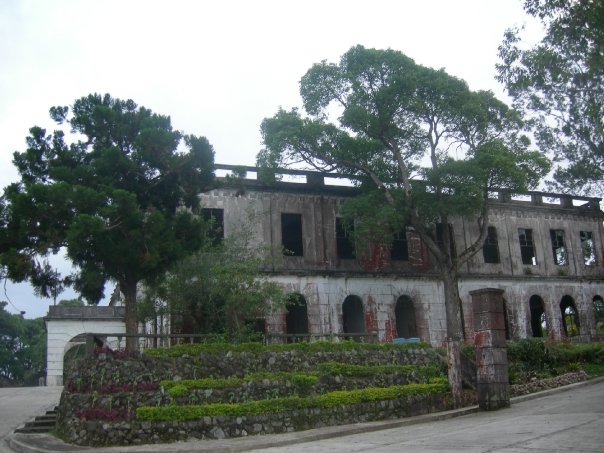


 Posts
Posts


